From Hypothesis to Discovery: My Journey in the Biology Lab
Aryan Sunam Pariyar
Xavier Int’l College, kalopul
“Lab work is a journey of discovery; embrace it!”
Introduction
I have always been intrigued by biology, especially the human body and its functions. While I found many topics in biology fascinating, practical work truly captured my interest. However, my journey into the biology lab began on a challenging note. I was a week late to attend lab sessions, and my teacher was understandably frustrated, reminding me that missing a practical meant I couldn’t participate again, as she had already taught my batchmates.
Despite my initial struggles, I explained my situation, and she allowed me to join in on the experiment involving paramecium. Although I struggled to identify it and didn’t know how to operate a microscope, I was thrilled to observe the permanent slides of paramecium. In the same week, our botany lab started, and I finally learned how to use the microscope effectively. Although I couldn’t retain all the information from the initial lesson, I thoroughly enjoyed the experience. I turned to YouTube, Google, and textbooks for additional help, and I developed a love for maintaining detailed files on my findings.
This marked the beginning of my journey from hypothesis to discovery in the biological lab, a world I had always imagined but was now finally experiencing firsthand.
Most Fascinating Experiments Done
Learning to Use the Microscope:
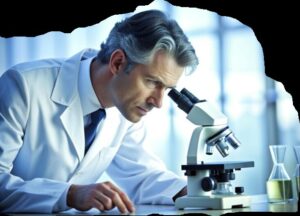
Learning how to use the microscope was a significant milestone in my lab journey. Initially, I faced difficulties focusing and adjusting the settings, but my supportive teachers guided me through the process. I learned how to prepare slides and observe different specimens, including cells and microorganisms. Although I still have room for improvement, I am confident that by the end of Grade 12, I will become proficient in this essential skill. The microscope opened up a new world of exploration for me, allowing me to appreciate the intricacies of life at the microscopic level.
Dissection of a Frog:
One of the most fascinating experiments I participated in was the dissection of a frog. This hands-on experience allowed me to explore the internal structures and organ systems of a vertebrate, specifically focusing on the alimentary canal. I was particularly amazed at how the frog’s anatomy is adapted for its environment. The dissection deepened my understanding of comparative anatomy and the similarities and differences among various organisms.
Dissection of an Earthworm:
Another memorable experience was the dissection of an earthworm. This experiment taught me about the segmented body plan and the digestive system of this important decomposer in our ecosystem. I learned to identify various structures, such as the crop and gizzard, and understood their functions in the earthworm’s life. This dissection reinforced my knowledge of invertebrate biology and the critical roles these organisms play in soil health.
Observations of Different Botanical Families:
In our botany lab, I observed various plant species from different botanical families. This experiment involved examining leaf structures, flower arrangements, and reproductive strategies. I enjoyed identifying key characteristics that distinguish one family from another, which enhanced my understanding of plant taxonomy and the diversity of life.
Exploring Plant Morphology:
Within the observations of botanical families, I found the morphology of plants to be the most interesting yet confusing part of my studies. Understanding the differences in plant structure and form required careful observation and critical thinking. This complexity added depth to my understanding of how plants adapt to their environments and interact with their ecosystem.
Difficulties I Had to Overcomes
1.Time Management:
Managing my time effectively between studying and practical experiments was challenging. To overcome this, I created a structured schedule and set clear goals. Using a planner helped me track assignments and study times, making it easier to balance my workload.
2.Practical File Management:
Maintaining organized practical files was another struggle. Initially, I found it hard to keep track of notes and observations. I overcame this by organizing files by topic, regularly updating them after each lab, and considering digital backups to preserve my work.
Lessons Learned
Lab work taught me practical skills like using a microscope, performing dissections, and organizing files, which made textbook concepts more real. I learned to observe details critically, as in plant morphology, and understand how theory connects to hands-on practice.
Future Goals in Biology
These experiences inspired me to explore biology further, potentially pursuing careers in research, healthcare, or environmental biology. The skills I’ve gained will be a solid foundation for any path I choose.
Advice for Fellow Students
Stay Organized: Regular updates to lab files make life easier.
Ask for Help: Don’t be afraid to seek guidance when needed.
Learn from Mistakes: They’re part of the learning process.
Connect Theory with Practice: Relating practicals to theory strengthens understanding.
Conclusion
My experiences in the biology lab have been both challenging and rewarding, shaping my understanding of biology beyond textbooks. From learning to use a microscope to dissecting organisms, these hands-on activities made concepts come to life and developed my analytical skills. The journey hasn’t been without difficulties, but overcoming them has made me more confident in my abilities.
For fellow students, the key is to stay organized, seek help when needed, and embrace every lab session as a step toward discovery. These lessons and skills have not only prepared me for exams but also sparked a genuine interest in pursuing biology further.