Q. Describe political science as a social science.
Ans:
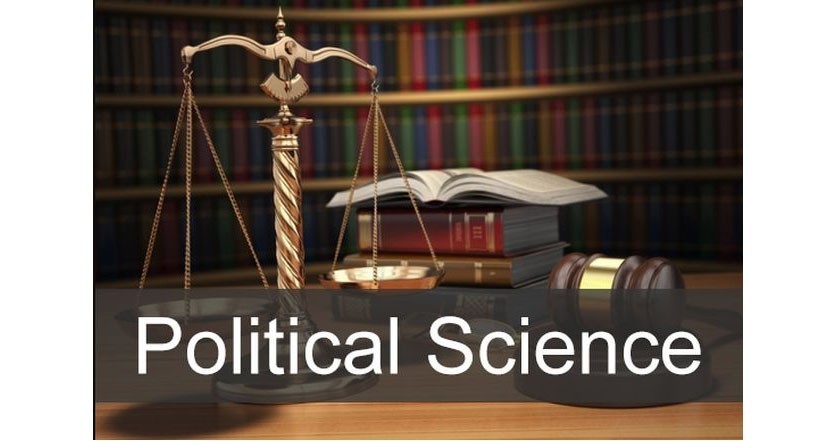
Political science is a social science that studies the theory and practice of politics and government. It is concerned with understanding the systems, institutions, processes, and behaviors that define political life and influence the distribution of power and resources in society. As a social science, political science employs a variety of methodologies to analyze political phenomena, ranging from qualitative approaches like case studies and historical analysis to quantitative methods such as statistical analysis and surveys.
Key areas of study within political science include:
1. **Political Theory:** This subfield explores the philosophical foundations of politics, including the nature and purpose of government, justice, liberty, and the rights and obligations of citizens. It involves the analysis of political ideas and ideologies, both historical and contemporary.
2. **Comparative Politics:** This area involves comparing political systems, institutions, and processes across different countries to identify patterns, differences, and their implications. Comparative politics helps in understanding how different political environments shape governance and policy outcomes.
3. **International Relations:** This field focuses on the interactions between countries, including issues of war and peace, trade, diplomacy, and international organizations. It examines how states and non-state actors engage in global politics and the factors that influence their behavior.
4. **Public Administration:** This subfield studies the implementation of government policy, focusing on the organization and functioning of public agencies, public management, and the behavior of public servants. It aims to improve efficiency, accountability, and effectiveness in the public sector.
5. **Public Policy:** This area analyzes the processes by which governments make decisions and implement laws. It examines the development, implementation, and impact of policies on society, evaluating their effectiveness and proposing alternatives.
6. **Political Economy:** This subfield explores the relationship between politics and economics, examining how political institutions and processes influence economic policies and outcomes, and vice versa. It addresses issues such as regulation, taxation, and the distribution of wealth.
7. **Political Behavior:** This area studies the actions and attitudes of individuals and groups in the political sphere, including voting behavior, public opinion, political participation, and the role of media. It seeks to understand what drives political engagement and how public perceptions shape political outcomes.
Q. Explain about political science education.
Ans: Political Science Education
Undergraduate Education
1. **Introduction to Political Science:** Overview of key concepts, theories, and political systems.
2. **Political Theory:** Study of classical and modern political thought.
3. **Comparative Politics:** Comparison of political systems across different countries.
4. **International Relations:** Examination of interactions between states and global issues.
5. **American Government:** Focus on the U.S. political system and its institutions.
6. **Public Policy and Administration:** Analysis of policy formulation and implementation.
7. **Research Methods:** Training in qualitative and quantitative research techniques.
Graduate Education
1. **Advanced Theoretical Training:** In-depth study of political theories and methodologies.
2. **Research and Thesis Work:** Original research leading to a Master’s thesis or Ph.D. dissertation.
3. **Specialization:** Focus on subfields like political theory, comparative politics, or international relations.
4. **Seminars and Workshops:** Presentation and discussion of research with peers and faculty.
5. **Teaching Experience:** Opportunities for teaching assistantships and professional development.
Skills Developed
1. **Analytical Thinking:** Critical analysis of political systems and policies.
2. **Research Skills:** Proficiency in designing and conducting research.
3. **Communication:** Strong written and oral communication abilities.
4. **Problem-Solving:** Addressing complex political issues effectively.
5. **Quantitative Analysis:** Skills in statistical analysis and data interpretation.
Career Paths
1. **Public Service:** Government agencies and public administration.
2. **Academia:** Teaching and research positions.
3. **Law:** Legal practice and law-related careers.
4. **International Organizations:** Roles in global entities like the UN and NGOs.
5. **Private Sector:** Political consulting, lobbying, and corporate affairs.
6. **Journalism:** Political reporting and analysis.
Q. State the meaning of instructional objective and explain its characteristics.
Ans:
### Meaning of Instructional Objective
An instructional objective is a clear, concise statement that defines what students are expected to learn and be able to do as a result of instruction. It outlines specific, measurable outcomes that guide both teaching and assessment.
### Characteristics of Instructional Objectives
1. **Specificity**
– Clearly defines the expected outcome.
– Focuses on a particular skill or knowledge area.
2. **Measurability**
– Includes criteria that allow for assessment of achievement.
– Uses action verbs to describe observable behaviors.
3. **Achievability**
– Realistic and attainable within the instructional period.
– Matches students’ level of knowledge and ability.
4. **Relevance**
– Aligns with broader educational goals and standards.
– Meaningful and significant to students’ learning.
5. **Time-bound**
– Specifies the timeframe within which the objective should be met.
– Helps in planning and pacing instruction.
6. **Learner-centered**
– Focuses on what the student will achieve, not what the teacher will do.
– Considers the needs and capabilities of the learners.
7. **Clarity**
– Free from ambiguity and easily understandable.
– Ensures both instructors and students know what is expected.
Q. State the importance of classification chart.
Ans:
### Importance of a Classification Chart
1. **Organization of Information**
– Helps in systematically organizing complex data.
– Makes it easier to understand relationships and hierarchies.
2. **Simplification of Complex Concepts**
– Breaks down intricate ideas into simpler, more manageable parts.
– Facilitates clearer understanding and learning.
3. **Visual Representation**
– Provides a visual format that aids in quick comprehension.
– Enhances memory retention through visual cues.
4. **Comparison and Contrast**
– Allows for easy comparison of different categories or items.
– Highlights similarities and differences effectively.
5. **Analysis and Interpretation**
– Assists in analyzing data to draw meaningful conclusions.
– Supports interpretation of information in a structured way.
6. **Teaching and Learning Aid**
– Acts as an effective tool in educational settings.
– Enhances teaching methods and aids student learning.
7. **Problem Solving**
– Facilitates identification of patterns and connections.
– Aids in diagnosing issues and generating solutions.
8. **Decision Making**
– Provides a clear framework for making informed decisions.
– Supports logical and evidence-based decision-making processes.
9. **Communication**
– Improves the clarity and effectiveness of communication.
– Helps in conveying complex information succinctly to diverse audiences.
10. **Standardization**
– Promotes uniformity in the categorization and interpretation of data.
– Ensures consistency across different studies and applications.
Q. State the stapes of micro-teaching.
Ans: Stages of Micro-Teaching
1. **Planning**
– **Define Objectives:** Clearly outline the specific teaching skills to be practiced.
– **Design Lesson Plan:** Develop a short, focused lesson plan targeting the selected skills.
2. **Teaching**
– **Teach Lesson:** Conduct the micro-lesson, typically lasting 5-10 minutes, with a small group of peers or students.
– **Use Techniques:** Apply specific teaching techniques to achieve the lesson objectives.
3. **Observation**
– **Receive Feedback:** Peers and supervisors observe the lesson and provide constructive feedback on performance.
– **Self-Evaluation:** Reflect on personal teaching performance and identify areas for improvement.
4. **Re-Planning**
– **Revise Lesson Plan:** Modify the lesson plan based on the feedback received and personal reflection.
– **Set New Objectives:** Adjust objectives to address areas needing improvement.
5. **Re-Teaching**
– **Teach Again:** Re-teach the revised lesson to the same or a different group, focusing on improving identified weaknesses.
– **Implement Changes:** Apply the feedback and new strategies to enhance teaching effectiveness.
6. **Re-Observation**
– **Observe Again:** Receive further feedback from peers and supervisors on the re-taught lesson.
– **Evaluate Progress:** Assess the improvement in teaching skills and identify remaining areas for development.
7. **Follow-Up**
– **Continuous Improvement:** Continue to refine teaching skills through ongoing practice and feedback.
– **Apply Skills:** Implement the developed skills in regular teaching environments.
Q. Prepare a lesson plan on any topic from the political science component of social studies of grade 10 in Nepal.
Ans:
Lesson Plan: Federalism in Nepal
Subject: Social Studies (Political Science Component)
Grade: 10
Topic: Federalism in Nepal
Duration: 45 minutes
Objectives
By the end of the lesson, students will be able to:
1. Define federalism and explain its significance.
2. Describe the federal structure of Nepal.
3. Identify the roles and responsibilities of federal, provincial, and local governments in Nepal.
4. Analyze the benefits and challenges of federalism in Nepal.
Materials
– Whiteboard and markers
– PowerPoint presentation
– Handouts with the federal structure of Nepal
– Map of Nepal showing federal, provincial, and local divisions
– Projector
– Flashcards for group activity
Lesson Structure
Introduction (10 minutes)
1. **Greeting and Attendance (2 minutes)**
– Greet students and take attendance.
2. **Warm-up Discussion (3 minutes)**
– Ask students what they know about federalism and how they think it might apply to Nepal.
3. **Learning Objectives (2 minutes)**
– Present the lesson objectives on the board.
4. **Introduction to Federalism (3 minutes)**
– Briefly explain the concept of federalism using a simple definition: “Federalism is a system of government where power is divided between a central authority and various regional governments.”
Main Content (25 minutes)
1. **Federal Structure of Nepal (10 minutes)**
– Use a PowerPoint presentation to explain the federal structure of Nepal.
– Show the map of Nepal divided into federal, provincial, and local governments.
– Discuss the roles and responsibilities of each level of government:
– **Federal Government:** National policies, defense, foreign affairs, central budget.
– **Provincial Governments:** Regional development, provincial legislation, coordination between local and federal levels.
– **Local Governments:** Municipal services, local infrastructure, community development.
2. **Benefits of Federalism (5 minutes)**
– Explain the potential benefits of federalism:
– Improved local governance
– Greater regional autonomy
– Enhanced representation and accountability
3. **Challenges of Federalism (5 minutes)**
– Discuss the challenges faced by federalism in Nepal:
– Coordination between different levels of government
– Resource distribution
– Maintaining national unity
4. **Interactive Group Activity (5 minutes)**
– Divide the class into small groups.
– Distribute flashcards with different scenarios (e.g., a local infrastructure project, a national defense issue, a regional education program).
– Ask each group to decide which level of government (federal, provincial, or local) would be responsible for handling the scenario and why.
Conclusion (10 minutes)
1. **Group Presentations (5 minutes)**
– Have each group present their scenario and explain their reasoning.
2. **Summary (3 minutes)**
– Summarize the key points discussed in the lesson:
– Definition and significance of federalism
– Federal structure of Nepal
– Roles of federal, provincial, and local governments
– Benefits and challenges of federalism
3. **Q&A Session (2 minutes)**
– Open the floor for any questions from students.
4. **Assignment (1 minute)**
– Assign a short essay for homework: “Discuss the importance of federalism in promoting local governance in Nepal.”
Assessment
– **Formative:** Observation during group activities and class participation.
– **Summative:** Evaluation of the homework essay on federalism’s role in local governance.
Q. What is test? Differentiate between subjective and objective test.
Ans: A test is an assessment tool used to measure a person’s knowledge, skills, abilities, or other attributes. It can be used in educational settings to evaluate students’ understanding of material, in professional contexts to gauge competency, or in psychological settings to assess mental and emotional functioning.
Differentiation between Subjective and Objective Tests
Subjective Tests
- Definition:
- Subjective tests are those in which the answers are evaluated based on the examiner’s judgment. They often require students to produce original responses, such as essays, short answers, or oral presentations.
- Characteristics:
- Open-Ended: Questions often require detailed, explanatory answers.
- Evaluation: Answers are evaluated based on the content, coherence, depth of understanding, and sometimes the style of writing.
- Scoring: Scoring can be inconsistent and may vary between different evaluators. It requires a rubric or specific criteria to ensure fairness.
- Examples: Essay questions, short answer questions, oral exams, and performance tasks.
- Advantages:
- Encourages critical thinking and creativity.
- Allows for demonstration of comprehensive understanding.
- Tests ability to organize and express thoughts.
- Disadvantages:
- Time-consuming to grade.
- Potential for evaluator bias.
- Difficult to ensure consistency and objectivity in scoring.
Objective Tests
- Definition:
- Objective tests consist of questions that have specific, correct answers. They are typically in the form of multiple-choice, true/false, matching, or fill-in-the-blank questions.
- Characteristics:
- Closed-Ended: Questions have predetermined correct answers.
- Evaluation: Answers are evaluated based on a clear, unambiguous key.
- Scoring: Scoring is consistent, quick, and objective. It can often be done by automated systems.
- Examples: Multiple-choice questions, true/false questions, matching questions, fill-in-the-blank questions.
- Advantages:
- Easy and quick to grade.
- Reduces scorer bias.
- Can cover a broad range of content in a relatively short amount of time.
- Disadvantages:
- May encourage rote memorization rather than deep understanding.
- Limits the ability to assess higher-order thinking and creativity.
- Often does not allow for explanation or elaboration by the student.