EctoLife: The Future of Artificial Womb Technology
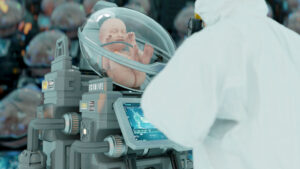
EctoLife is an advanced concept in artificial womb technology that promises to revolutionize the way human beings are conceived and gestated. This futuristic idea envisions a facility where human embryos could be nurtured in external, artificial wombs, offering a potential alternative to traditional pregnancy. While still largely theoretical, EctoLife represents a significant leap in biotechnology and reproductive science, raising both exciting possibilities and profound ethical questions.
The Concept of EctoLife
EctoLife is designed around the idea of creating an artificial environment that can replicate the conditions of a human uterus, allowing for the complete gestation of a fetus outside the mother’s body. This concept draws on decades of research into artificial wombs, which have primarily focused on saving premature babies. The EctoLife facility would be equipped with advanced bioreactors, each serving as an artificial womb, where embryos could develop under carefully controlled conditions.
The artificial wombs in EctoLife would be connected to a series of tubes and monitors that supply the embryo with nutrients and oxygen while removing waste products. This system mimics the natural placental function, ensuring that the embryo receives everything it needs for healthy development. The growth process would be closely monitored by a team of scientists and medical professionals, using real-time data and imaging technologies to track progress and make any necessary adjustments.
Potential Benefits of EctoLife
EctoLife could offer a range of benefits, particularly for individuals or couples who are unable to conceive or carry a pregnancy to term due to medical issues. For example, women with uterine abnormalities, recurrent miscarriages, or health conditions that make pregnancy dangerous could potentially have biological children through the use of artificial wombs. This technology could also help alleviate some of the risks associated with traditional pregnancy, such as gestational diabetes, preeclampsia, or childbirth complications.
Another potential benefit of EctoLife is the ability to optimize prenatal care. In traditional pregnancies, factors such as maternal diet, stress, and environmental exposures can significantly impact fetal development. With EctoLife, scientists could control every aspect of the fetus’s environment, reducing the risk of developmental disorders and enhancing the overall health outcomes for the child.
EctoLife could also play a crucial role in addressing demographic challenges. In countries facing declining birth rates, such technology could help stabilize population levels by making reproduction more accessible and less dependent on the biological constraints of traditional pregnancy.
Ethical and Societal Implications
Despite its potential benefits, EctoLife raises significant ethical and societal concerns. One of the primary ethical questions revolves around the commodification of human life. If human gestation can be outsourced to artificial wombs, it might lead to a future where reproduction is commercialized, raising concerns about inequality and the exploitation of vulnerable populations.
There are also concerns about the psychological impact on children born from artificial wombs. Questions about identity, the maternal bond, and the long-term effects of being gestated in a non-human environment are difficult to answer with current knowledge. Additionally, the idea of “designer babies,” where parents could potentially choose certain traits or characteristics for their children, adds another layer of ethical complexity.
From a societal perspective, the widespread adoption of EctoLife technology could change the very nature of parenthood and family structure. The traditional roles of mothers and fathers might evolve as the biological necessity of carrying a child is removed. This could lead to new definitions of family and parenthood, challenging deeply ingrained social norms and values.
Current Research and Development
While EctoLife remains a theoretical concept, significant strides have been made in related fields. Researchers have already developed partial artificial wombs that have successfully sustained premature lambs, demonstrating that it is possible to support fetal development outside of a mother’s body for part of the gestational period . These developments provide a foundation upon which more advanced technologies, like EctoLife, could be built.
Scientists are also exploring the use of stem cells to create embryos and grow tissues, which could be integrated into artificial womb technology . Advances in bioengineering, nanotechnology, and prenatal care continue to push the boundaries of what is possible, making the concept of EctoLife increasingly plausible.
Debatable Points Regarding EctoLife
1. Ethics of Human Gestation Outside the Body:
– Pro: EctoLife could provide a safe, controlled environment for fetal development, reducing risks associated with pregnancy and childbirth.
– Con: The idea of gestating human beings outside the human body raises profound ethical concerns, including the potential dehumanization of reproduction and the commodification of human life.
2. Impact on the Parent-Child Bond:
– Pro: EctoLife could allow parents who are unable to carry a pregnancy to experience the joy of having a biological child, possibly enhancing family bonds.
– Con: The absence of traditional pregnancy might affect the emotional bond between the mother and the child, potentially impacting the child’s psychological development.
3. Accessibility and Social Inequality:
– Pro: EctoLife could democratize access to parenthood, offering new opportunities to those unable to conceive or carry a pregnancy.
– Con: If EctoLife becomes a premium service, it could exacerbate social inequalities, with only the wealthy able to afford the technology, leading to a “genetic divide.”
4. Designer Babies and Genetic Modification:
– Pro: EctoLife could potentially allow for the correction of genetic disorders before birth, leading to healthier individuals and reducing the burden of genetic diseases.
– Con: The technology might be used for non-medical enhancements, leading to “designer babies” where traits like intelligence, appearance, and abilities are selected, raising ethical concerns about eugenics.
5. Regulation and Oversight:
– Pro: With proper regulation, EctoLife could be a safe and effective alternative to traditional pregnancy, ensuring ethical standards are upheld.
– Con: The rapid development of such advanced technology might outpace regulatory frameworks, leading to potential misuse or unforeseen consequences before proper oversight is established.
6. Redefinition of Motherhood and Family Structure:
– Pro: EctoLife could redefine traditional roles of motherhood, allowing for more diverse family structures and empowering women by separating reproduction from their bodies.
– Con: The detachment of motherhood from pregnancy could challenge deeply ingrained social norms, potentially leading to a societal shift in the perception of parenthood and family dynamics.
7. Long-Term Health and Psychological Effects:
– Pro: EctoLife could reduce prenatal exposure to harmful substances, leading to healthier outcomes for the child.
– Con: There is uncertainty about the long-term health and psychological effects on children gestated in artificial wombs, as they may miss out on critical prenatal experiences that occur in the natural womb environment.
8. Environmental and Population Control:
– Pro: EctoLife could help manage population growth in societies facing demographic challenges, such as declining birth rates, by making reproduction more accessible.
– Con: The widespread adoption of artificial wombs could lead to ethical dilemmas regarding population control and the societal implications of mass production of human beings.
9. Cultural and Religious Beliefs:
– Pro: EctoLife could be seen as a scientific advancement that complements modern values of choice and autonomy in reproduction.
– Con: Many cultures and religions may view EctoLife as unnatural or even immoral, conflicting with traditional beliefs about the sanctity of natural conception and birth.
10. Potential for Abuse and Unintended Consequences:
– Pro: With stringent safeguards, EctoLife could be used responsibly to advance human health and wellbeing.
– Con: The technology could be misused for unethical purposes, such as creating human beings for labor or other exploitative practices, leading to unintended and potentially dangerous societal consequences.
EctoLife represents a bold vision for the future of human reproduction, with the potential to transform the way we conceive, gestate, and give birth. While the technology is still in its infancy, the implications of artificial wombs could be profound, offering new hope to those struggling with infertility, improving prenatal health, and potentially reshaping societal norms. However, the ethical and societal challenges posed by EctoLife cannot be ignored. As the science progresses, it will be crucial for researchers, ethicists, policymakers, and the public to engage in thoughtful dialogue about the role of this technology in our future. The path forward must balance innovation with caution, ensuring that the benefits of EctoLife are realized while mitigating potential risks.
References:
1. Aldhous, P. (2020). “Artificial wombs: the coming era of motherless births?” *Nature News*. Retrieved from https://www.nature.com/articles/d41586-020-02626-7
2. Lavazza, A. (2019). “Ectogenesis: Artificial Wombs and the Future of Reproduction.” *Cambridge Quarterly of Healthcare Ethics*. Retrieved from https://www.cambridge.org/core/journals/cambridge-quarterly-of-healthcare-ethics
3. Hyun, I. (2021). “The Ethics of Human Artificial Wombs.” *Hastings Center Report*. Retrieved from https://onlinelibrary.wiley.com/doi/full/10.1002/hast.1260
4. Partridge, E. A., et al. (2017). “An extra-uterine system to physiologically support the extreme premature lamb.” *Nature Communications*. Retrieved from https://www.nature.com/articles/ncomms15112
5. Green, R. M. (2001). “Babies by Design: The Ethics of Genetic Choice.” *Yale University Press*. Retrieved from https://yalebooks.yale.edu/book/9780300209570/babies-design
6. Sparrow, R. (2021). “The End of Pregnancy: ectogenesis, capital, and the futures of human reproduction.” *Studies in History and Philosophy of Biological and Biomedical Sciences*. Retrieved from https://www.sciencedirect.com/science/article/abs/pii/S1369848621000141
7. Greely, H. T. (2021). “The End of Sex and the Future of Human Reproduction.” *Harvard University Press*. Retrieved from https://www.hup.harvard.edu/catalog.php?isbn=9780674728967
8. Palacios-González, C., Harris, J., & Testa, G. (2014). “Multiplex parenting: IVG and the generations to come.” *Journal of Medical Ethics*. Retrieved from https://jme.bmj.com/content/40/11/752