Microteaching
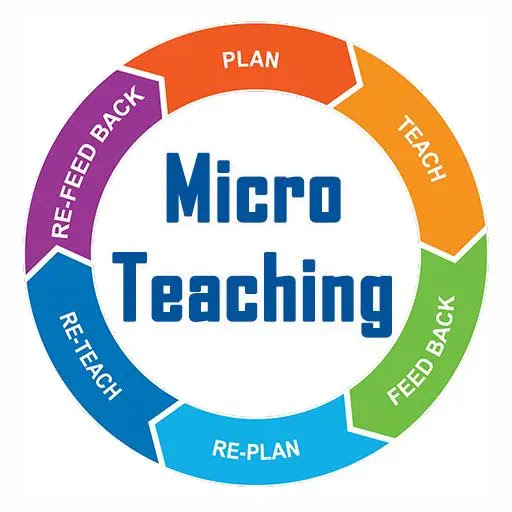
Microteaching is a teacher training technique designed to help teachers improve specific teaching skills and strategies in a controlled, low-pressure environment. The key features and steps involved in microteaching include:
- Short Duration: Lessons are typically 5-10 minutes long, focusing on a particular skill or topic.
- Small Group: The lesson is presented to a small group of peers or students, making it more manageable and less intimidating.
- Feedback-Oriented: The lesson is observed by peers, mentors, or supervisors who provide detailed, constructive feedback.
- Iterative Process: Teachers reflect on the feedback, modify their lesson plan, and re-teach the lesson to incorporate improvements. This cycle can be repeated to refine teaching techniques.
Steps of Microteaching:
- Planning: Prepare a concise lesson focusing on a specific teaching skill.
- Teaching: Deliver the lesson to a small group.
- Observation: Receive feedback from observers who focus on the targeted skills.
- Feedback: Discuss strengths and areas for improvement based on the observations.
- Re-teaching: Revise and improve the lesson based on feedback, then teach it again.
- Re-observation: Observe the re-taught lesson to assess improvements.
- Reflection: Reflect on the entire process to internalize lessons learned.
Team Teaching
Team Teaching involves two or more teachers collaboratively planning, instructing, and assessing a single group of students. This approach leverages the strengths and expertise of each teacher to enhance the learning experience. Key aspects of team teaching include:
- Collaboration: Teachers work together to plan lessons, share instructional responsibilities, and evaluate student progress.
- Diverse Expertise: Each teacher brings different skills and knowledge, providing a richer and more varied learning experience.
- Flexibility in Roles: Teachers can take on different roles, such as leading the class, assisting, or focusing on small groups, depending on the needs of the lesson and students.
- Enhanced Support: With multiple teachers, students receive more individualized attention and support.
Models of Team Teaching:
- Lead and Support: One teacher leads the instruction while the other provides support by assisting students and managing the classroom.
- Parallel Teaching: Teachers split the class into two groups and teach the same content simultaneously.
- Station Teaching: Students rotate between stations, each managed by a different teacher, focusing on different aspects of the lesson.
- Alternative Teaching: One teacher instructs the larger group while the other works with a smaller group needing specialized attention.
Benefits of Team Teaching:
- Enhanced Learning: Students benefit from the diverse expertise and teaching styles of multiple educators.
- Professional Development: Teachers learn from each other, improving their own teaching practices.
- Student Support: More opportunities for individualized instruction and support.
Both microteaching and team teaching aim to improve educational outcomes, but they do so through different methods and contexts. Microteaching focuses on skill development in a controlled setting, while team teaching emphasizes collaborative instruction and leveraging diverse teacher strengths.
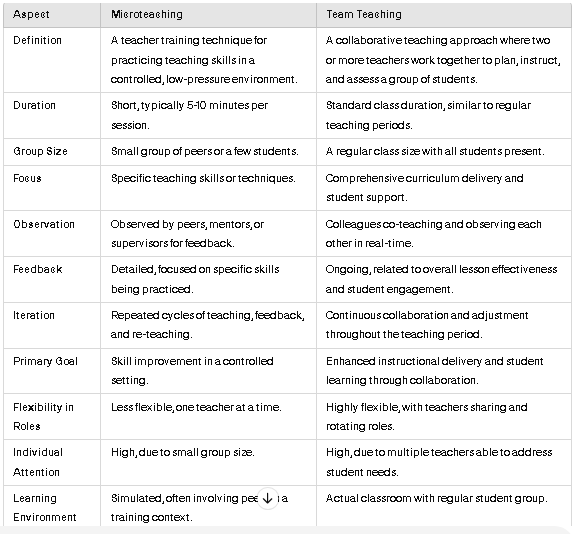
Few differences between Micro teaching and Team teaching
Team Teaching Procedure at the Secondary Level in Nepal
1. Planning Phase:
- Collaborative Planning: Teachers involved in team teaching collaborate to plan the curriculum. This includes identifying the topics, setting learning objectives, and deciding on the teaching methods and materials to be used.
- Role Allocation: Assign specific roles to each teacher based on their strengths and expertise. One might focus on delivering the lecture, another on creating activities, and another on assessing student progress.
- Schedule Coordination: Coordinate schedules to ensure that all team members are available for planning sessions and classroom instruction.
2. Preparation Phase:
- Resource Development: Develop teaching aids, handouts, and digital resources. This may involve creating multimedia presentations, worksheets, and other instructional materials.
- Lesson Design: Design detailed lesson plans that include the activities for each teacher, the sequence of instruction, and the methods of assessment.
- Professional Development: Engage in professional development to understand the dynamics of team teaching, classroom management strategies, and effective communication techniques.
3. Implementation Phase:
- Co-Teaching: In the classroom, teachers take on their designated roles. One teacher might start with an introduction to the topic, while another facilitates group activities, and another monitors student progress.
- Interactive Teaching: Use interactive teaching methods such as group discussions, debates, and project-based learning to engage students actively.
- Support and Supervision: While one teacher leads the class, the others provide support by assisting students who need help, managing classroom behavior, and ensuring that all students are engaged.
4. Monitoring and Assessment Phase:
- Formative Assessment: Conduct regular formative assessments to gauge student understanding. This includes quizzes, oral questions, and interactive activities.
- Student Feedback: Collect feedback from students about the teaching methods and materials used. This can be done through surveys or informal discussions.
- Reflective Practice: After each lesson, teachers meet to reflect on what worked well and what could be improved. This reflection is critical for continuous improvement.
5. Evaluation and Adjustment Phase:
- Summative Assessment: Administer summative assessments such as end-of-term exams to evaluate overall student learning and progress.
- Data Analysis: Analyze the results of assessments to identify areas where students are excelling and where they need more support.
- Adjustments: Make necessary adjustments to teaching methods, materials, and the division of roles based on the data collected and the feedback received.
6. Institutional Support:
- Administrative Coordination: Ensure that the school administration supports team teaching by providing the necessary resources, time for collaboration, and professional development opportunities.
- Parental Involvement: Engage with parents to explain the benefits of team teaching and how it enhances student learning.
Contextual Considerations for Nepal:
- Resource Availability: Adapt the team teaching model to the resources available in Nepali schools, which may vary widely between urban and rural areas.
- Cultural Sensitivity: Ensure that teaching methods are culturally sensitive and relevant to the students’ backgrounds.
- Language Barriers: Address any language barriers by incorporating both Nepali and English in teaching materials and instruction, as per the medium of instruction in the school.
- Technological Integration: Leverage available technology to enhance learning, keeping in mind the varying levels of access to digital tools across different regions.
By following these steps, team teaching at the secondary level in Nepal can be effectively implemented, leading to a more collaborative, engaging, and supportive learning environment for students.
Microteaching Lesson Plan on Local Level Election in Nepal
Subject: Social Studies
Grade Level: Secondary (Grades 9-10)
Topic: Local Level Election in Nepal
Duration: 10 minutes
1. Lesson Objectives:
- Knowledge: Students will understand the structure and significance of local level elections in Nepal.
- Skills: Students will develop the ability to describe the election process and identify key roles and responsibilities of elected officials.
- Attitude: Students will appreciate the importance of participation in local elections for democratic governance.
2. Materials Needed:
- Whiteboard and markers
- PowerPoint presentation slides
- Handouts with key information
- Short video clip on local elections (optional)
- Chart paper and markers for group activity
3. Lesson Outline:
Introduction (1 minute):
- Greet the students and briefly introduce the topic.
- “Today, we will learn about local level elections in Nepal and why they are important for our democracy.”
Content Delivery (3 minutes):
- Definition and Purpose:
- Explain what local level elections are.
- “Local level elections are held to elect representatives for municipalities and rural municipalities. These representatives manage local affairs and development projects.”
- Structure:
- Describe the structure of local government in Nepal (Municipalities, Rural Municipalities, Wards).
- “Nepal is divided into municipalities and rural municipalities. Each is further divided into wards, and representatives are elected for each ward.”
- Election Process:
- Outline the steps of the election process (nomination, campaigning, voting, and results).
- “Candidates are nominated, they campaign to win support, citizens vote, and results are announced.”
Interactive Activity (3 minutes):
- Group Discussion:
- Divide the students into small groups and give each group a piece of chart paper and markers.
- Ask them to list the roles and responsibilities of local government officials.
- “In your groups, discuss and write down the roles and responsibilities of local officials. Think about how they contribute to your community.”
Conclusion (2 minutes):
- Group Presentations:
- Have each group present one key responsibility they discussed.
- “Let’s hear one important role from each group.”
- Wrap-Up:
- Summarize the key points covered in the lesson.
- “Today, we learned about the local level elections, their structure, and the election process. Remember, local officials play a crucial role in managing our communities.”
- Q&A:
- Invite any quick questions from students.
- “Do you have any questions about local elections?”
Assessment (1 minute):
- Exit Ticket:
- Ask students to write down one thing they learned about local elections and submit it as they leave.
- “Before you go, please write one thing you learned today about local elections and hand it to me.”
4. Reflection:
- After the lesson, reflect on what went well and what could be improved.
- Consider student engagement, clarity of explanations, and effectiveness of the interactive activity.
- “Did the students understand the election process? Were they engaged during the group activity? How can I improve the lesson next time?”
This microteaching lesson plan aims to introduce students to the concept and importance of local level elections in Nepal in a concise and engaging manner.