
In Nepal, educational opportunities are often limited by socioeconomic status, favoring the wealthy, while in the United States, access to quality education is more widely available regardless of financial means. Additionally, the US education system benefits from superior technological resources to support student learning. Furthermore, there is a significant contrast in job placement and career prospects between the two countries.
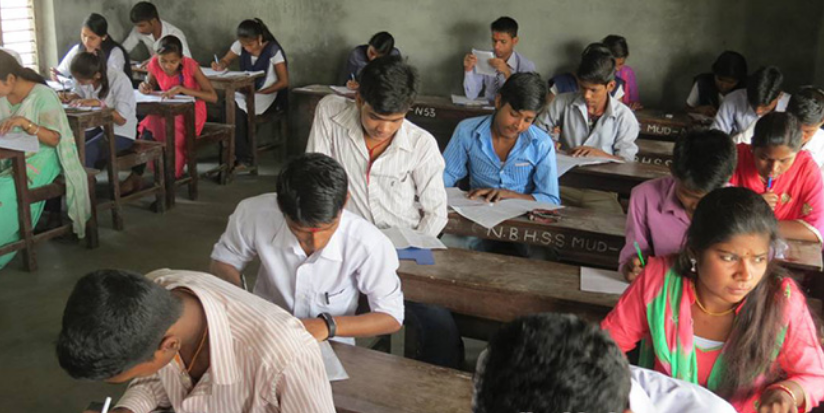
Despite cultural differences, I’ve noticed that Nepali students often display sincerity and politeness towards their teachers, while American students tend to feel more comfortable expressing themselves and interacting openly with their instructors, thanks to the greater emphasis on student empowerment. Personally, I prefer cultivating a friendly rapport with my students in both settings.
The social status of teachers varies significantly between Nepal and the USA. In Nepal, there’s a strong tradition of respecting teachers, rooted in the cultural reverence for educators as ‘gurus,’ although this respect has somewhat diminished in recent years. In contrast, American students, particularly in higher education, often address their instructors or principal investigators (PI) by their first names. This informal approach to teacher-student relationships is quite different from the Nepali tradition, where addressing teachers by their first names is uncommon.
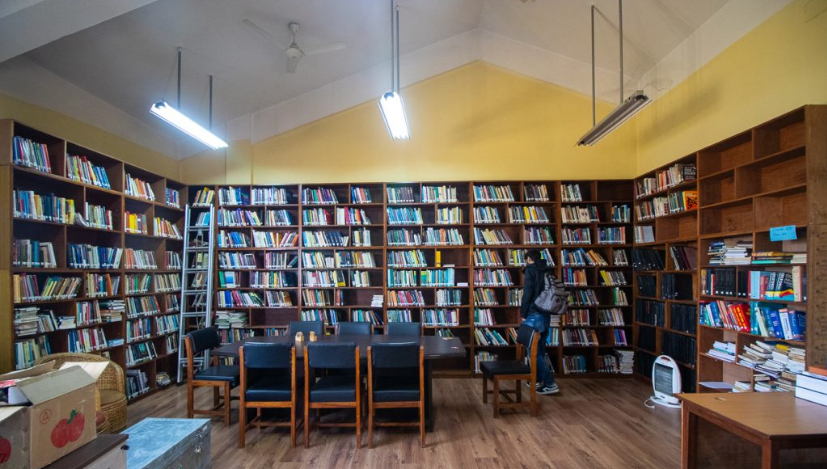
A new library of the Tribhuvan University’s Central Department of Anthropology
In the US education system, both rich and poor students have access to equal educational opportunities, supported by various resources such as computers, libraries, and transportation. Conversely, in Nepal, higher education is primarily accessible to wealthy students, as poorer families struggle to afford it. While governmental efforts are gradually changing this scenario in Nepal, scholarships and federal aid play a significant role in supporting disadvantaged students in the US.
Technology plays a pivotal role in education in the US, with abundant resources available for learning through computers and streamlined processes for submitting work, saving time for both teachers and students. In Nepal, however, reliance on traditional learning methods, primarily through books, persists, though the COVID-19 pandemic has prompted some adaptation.
Teacher evaluation practices differ markedly between the two systems. In Nepal, particularly in higher education, there’s minimal evaluation of professors post-appointment, leading to complacency among some educators. Conversely, the US system emphasizes ongoing evaluation by students each semester, fostering a culture of continuous improvement among teachers.
Examinations in Nepal tend to prioritize memorization over critical thinking, contributing to stress for students and parents alike, with exam schedules dictating school activities. Conversely, the US places greater emphasis on creativity and critical thinking, with exams often integrated into regular teaching practices, reducing stress levels for students, particularly in lower grades.
In the Nepali education system, there’s a strong emphasis on rote learning, where students prioritize memorization of material to excel, particularly in quantitative subjects. However, this approach often results in the perception of knowledge as fixed facts rather than concepts open to critical examination.
Conversely, the American education system places a greater emphasis on developing soft skills and fostering a competitive spirit while encouraging students to cultivate broader knowledge across subjects. Unlike in Nepal, where grades are primarily determined by performance in midterm and final exams, the US system places weight on various assessments such as assignments, quizzes, and daily classwork/homework. Although the Nepali education system is evolving, these differences highlight contrasting approaches to grading and assessment.
In Nepal, the education system predominantly focuses on memorization, reveres teachers, and prioritizes scoring well in final exams, although recent changes are gradually altering this landscape. Conversely, the US education system emphasizes learning through exploration and understanding, integrating practical learning alongside theoretical concepts. It minimizes stress associated with written exams and promotes holistic evaluation of students’ daily progress.
Despite their differences, both systems boast qualified teachers and a commitment to providing quality education aligned with modern science and technology. They also offer a mix of private and public schooling options, feature standardized curricula, and aim to produce skilled professionals for society.
However, there’s room for improvement in both systems. In Nepal, the rigid structure necessitates students to study all subjects daily without flexibility. Extracurricular activities and physical education are often sidelined, although there’s growing recognition of their importance. In higher education, there’s a need for greater emphasis on research, necessitating adequate funding for faculty-run labs.